Helping tech founders, startups, investors, and talent get connected and discover events and programs across Wisconsin since 2017.
[New Episode] 🎙️ Why do founders get judged on their team more than their product?
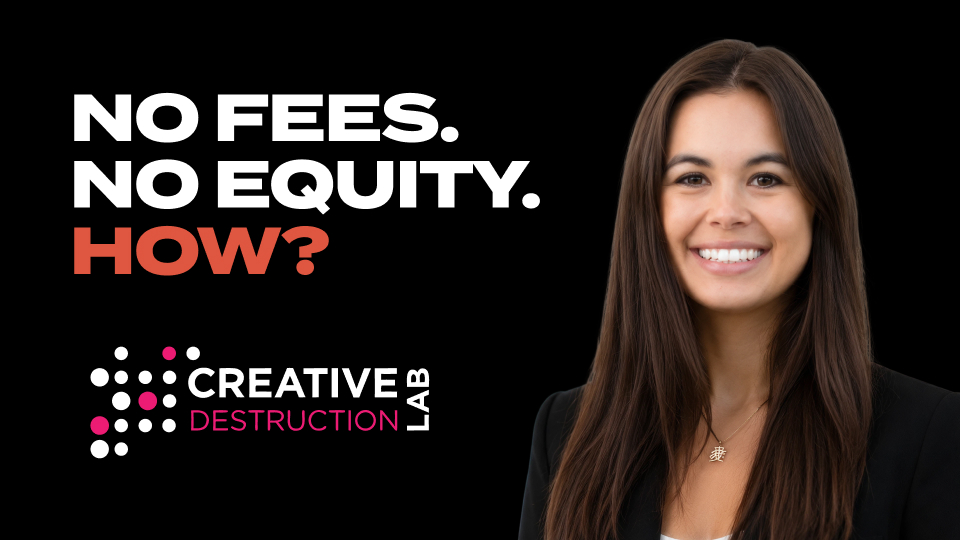
⏰ Heads up: CDL applications close tonight. Today is the deadline for Creative Destruction Lab's 2026/27 cohort. Applications close at 11:59 PM ET, which is 10:59 PM here in Central. That covers both CDL-Wisconsin streams at UW-Madison, Health and Wellness and Risk, plus every other stream across their 16 locations. This episode digs deep into how the program actually works, so if you have been weighing it, this is the fastest way to know what you would be signing up for. Episode 21 now available!
Ep 21 - Kai Heineman, Venture Manager, Creative Destruction LabHow Creative Destruction Lab Builds Startups Without Taking EquityKai Heineman and her team decide which startups get into Creative Destruction Lab. Half of that decision has nothing to do with the product. Fifty percent of her evaluation is the team. Thirty percent is the product. Twenty percent is the market. She knows that split surprises people, because the product is what customers actually buy. But at seed stage, the team is what has to navigate uncertainty, raise money, find customers, change direction, and keep showing up when it gets hard. Kai leads the health and wellness stream at CDL's Madison site. The program recruits globally, so out of roughly 20 companies a year, only one to four come from Wisconsin or the Midwest. The rest fly in from the UK, Israel, anywhere. Which raises a fair question: why would a program running sites from London to San Sebastian to Estonia plant a flag here? This conversation gets into what Kai actually looks for, why founders are held to exactly three objectives at a time, and what visiting founders figure out about Wisconsin once they're standing in it. We dig into why CDL runs a year-long program with sessions only every eight weeks, how the state's health system made Madison worth the trip, how UW students get placed into global startups through a CDL course, and why Kai thinks the gap between a warm intro and a cold one decides whether you make it. All that and more inside this episode
Topics discussed
Key learningsThe model is philanthropic, and the mentors are the product. CDL is a nonprofit, funded by donations from entrepreneurs, corporate partners, and the universities that host it. No fees, no equity, no IP. Wisconsin founders already have free options, and Kai was quick to point that out herself, naming gener8tor without prompting. More doors is the point. What that structure does is change what the program is selling. With no stake at the end of it, the value has to be the access itself: mentors who are world-class scientists, operators, clinicians, and people who have built and sold companies. That's the thing to compare when you're weighing one program against another. Time is the resource, so the program stays light touch. Kai described CDL as anti-content, which I loved. Nobody is lecturing at you. There's no hand-holding. The commitment runs a full year, October to May, but the sessions themselves only happen every eight weeks. What that buys is room. The real work happens between sessions, in individualized mentorship with people who raised their hand because they can help with the specific thing you're stuck on. If your pitch deck isn't landing, investors step in. If it's go-to-market, you get operators. Three objectives, eight weeks, nothing else. Founders leave each session with exactly three things to accomplish before the next one, usually spread across categories. One tends to be investment, like closing a round or securing a lead. Another tends to be go-to-market, like a first LOI or a first customer. Kai tied this to the valley of death, where a company has a little traction and then dies from spreading itself too thin. You are always working on a million things as a founder. The point of narrowing to three is that at the end of the year you can look back and see that you actually moved. Wisconsin wasn't a consolation prize. I asked why a program running sites from London to Estonia would come to Madison. The first answer is American Family Insurance, which anchored CDL Wisconsin's original risk and insurance stream. Corporate partners play a double role: they sponsor the stream, which is how a nonprofit stays alive, and they send their own experts in as mentors. The second answer is the one Kai says gets slept on. The health and hospital system here is enormous. UW Health, Froedtert and the Milwaukee institutions, Mayo Clinic right down the road. That concentration is exactly what a health and wellness stream needs. What founders find when they actually show up. CDL recruits globally. Out of roughly 20 companies a year in Kai's stream, maybe one to four come from Wisconsin or the Midwest. The rest come from the UK, Israel, anywhere. What she's looking for is something massively scalable, either financially or in social good. So founders arrive with the usual assumptions. Cheese, beer, cows, nothing happening. Then they tour the Epic Systems campus, which Kai describes as its own self-sustaining organism, and the frame shifts. Founders who came for one session start booking a week for the next. Droxy, an Israeli company that arrived with five to ten people and has since grown past a hundred employees, still comes back to visit. Half the evaluation is the team. When I asked what separates founders who thrive from founders who struggle, Kai gave me numbers. Fifty percent of her evaluation is the team. Thirty percent is the product. Twenty percent is the market. She knows the split surprises people, because the product is the obvious answer, but her position is that the team is what makes or breaks a company at this stage. The quality she names is grit. The ability to bootstrap, to fundraise, to wear every hat, and to keep showing up on the days when it would be reasonable to let off the gas. She was blunt that this is not a nine to five and not a side project. UW students get a real on-ramp. There's a CDL course at UW-Madison. Students spend the fall learning what venture development actually involves, then in the spring they get placed directly with startups in Kai's cohort on real projects, like a computer science student doing back-end work on a product. The part that matters is what happens after. If a student does good work, they keep working with that company. One part-time MBA student who served as a venture manager ended up moving to a startup's location to join full time. Community is the whole point. I asked Kai what she'd leave founders with, and she went straight past the program to the thing underneath it. Being a founder is a lonely path. You are iterating against yourself, maybe a co-founder, maybe an AI, with nobody who has been where you are. Building a community of people who want to accelerate you is, in her words, the difference between succeeding and failing. She put it as plainly as possible: the gap between a warm intro and a cold intro makes all the difference in the world, and that gap is exactly why CDL exists.
Upcoming episodes 👀
What is the Startup Wisconsin Podcast?It's a new show where you can learn about Wisconsin's growing tech scene. Hear the stories of startups, founders, investors, and the incredibly generous people making it happen every single day.
Subscribe to the podcastToo busy right now but want to listen later?
Have questions?
|
Startup Wisconsin Newsletter
Helping tech founders, startups, investors, and talent get connected and discover events and programs across Wisconsin since 2017.
Startup Wisconsin is organized by Headway, a digital product agency based in Green Bay, WI. Powered by our state sponsors, Nicolet National Bank and gener8tor. Hey folks! Jacob Miller here. Coming up fast, October is Wisconsin Tech Month. Launch Wisconsin on the 6th, +Venture North on the 8th, HackGB in Green Bay mid-month, and then October 21 alone has six things happening: +Venture Health, the Biohealth Summit, Founder/Fest, Code + Brews, the Madison devs meetup, and a ghost tour. Pick...
Episode 22 now available! Ep 22 - Rukmini Banerjee, Co-Founder and CEO, CuroNow How CuroNow Brings Family Caregiving Into One Shared Place Rukmini Banerjee read one article and could not put it down. Her first thought was not about her parents. It was about her sister. The article said family caregivers of aging parents, especially parents with cognitive decline, face a 40% higher chance of facing the same struggles themselves later. Her parents live in Melbourne with her older sister. Her...
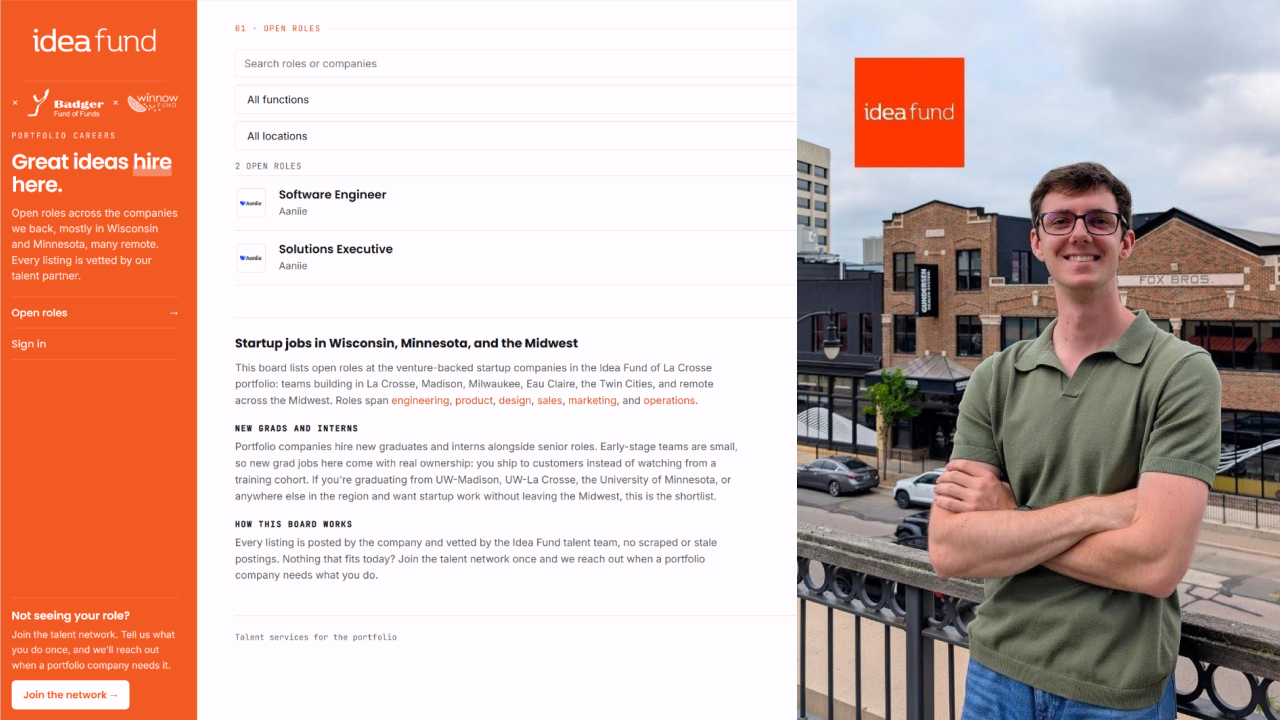
Startup Wisconsin Blog | August 25 2026 Featured article The Job Is Fine. Idea Fund of La Crosse Thinks That's the Problem. A college friend cut Travis Erath off mid-conversation to say "please, find me a job." Her job was fine. That was the whole complaint, and it turned out two other people in the room felt the same way. Travis is the new Talent Partner at the Idea Fund of La Crosse. He built a prototype of the portfolio career site while he was still applying for the role, and a good chunk...